In the workshop, a section/flange of an armoured pipe [compound material of normal steel (outside) and of wear-resistant steel (inside), with a diameter of 150 mm] needed to be cut.
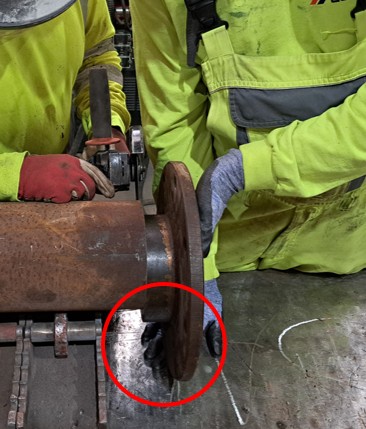
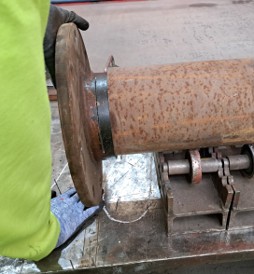
In the first phase of the operation the pipe section was placed on a roller stand, one employee cut all the way around the pipe (from above, the upper 180 °). The operator only cut the layer of normal steel, assuming that the wear-resistant steel inside still had sufficient contact with the flange.
For the final cut, the plan was to rotate the pipe (including the flange) by 180°. However, the connection between the normal steel and the inner wear-resistant steel was defective, a full compound of the two layers was compromised. As a result of this, the flange unexpectedly detached before the pipe could be rotated, and fell onto the finger of the second employee assisting with the task.
This resulted in a fracture of the first limb of the ring finger of the second colleague.
KEY FINDINGS
- The risk assessment was up to date.
- Although an on-site safety check (Take 5) was carried out, it failed to take into consideration the risk of the materials not bonding properly any longer and, consequently, the flange falling unexpectedly.
- The joint/compound in the armoured material was faulty.
- They had failed to secure the section/flange to prevent it from falling.
- They had been wearing normal gloves (without protectors).