DESCRIPTION
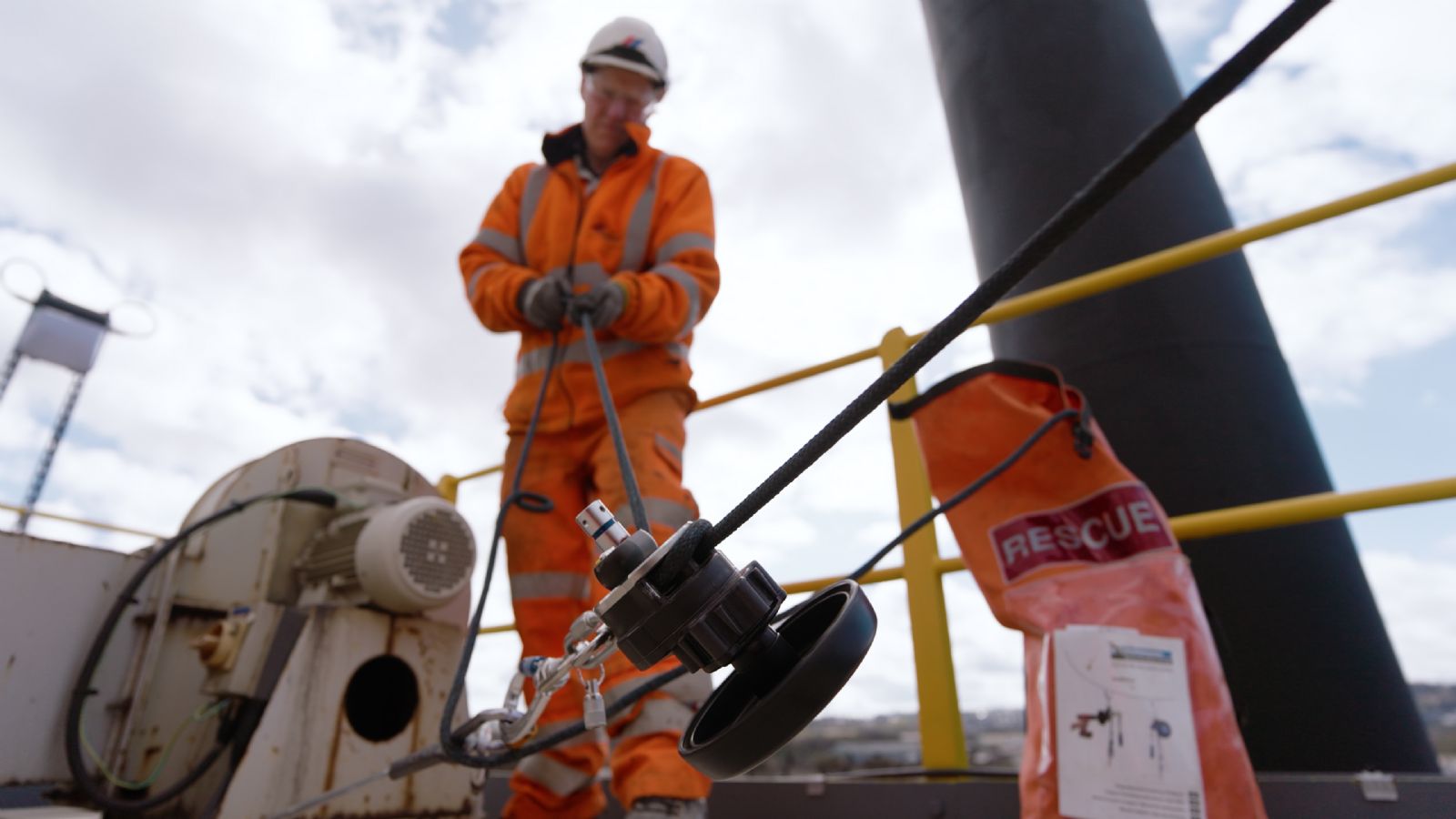
CEMEX’s asphalt business has fifteen plants, on these sites there are many structures which reach heights of up to 20m. Accessing the various levels of these structures often requires the operator to navigate vertical cat ladders, stairs and narrow walkways. While maintenance and inspections are routine, CEMEX was aware that the physical layout of these plants would make the extraction of someone in an emergency far from straightforward.
CEMEX also recognised that with its ageing workforce and their differing levels of fitness, some individuals were becoming more susceptible to the risk of a heart or stroke related medical emergency. With the existing methods of rescue CEMEX knew that if an operator became incapacitated due to a medical condition or injury that occurred at height, it would be reliant on the support of the emergency services to conduct a rescue.
The asphalt division wanted a rescue system in place that would enable it to extract a person to a safe position, where paramedics could administer treatment, without relying on the support of the emergency services. In addition, as standard fire engine ladders only reach 12.5m, there was already a potential shortfall in the ability of the fire service to use a ladder-based access for a rescue.
CEMEX invited Mines Rescue Training Services (MRTS) to advise on new equipment that would facilitate both confined space rescue and getting an injured person down to ground level. The existing equipment was old, and the rescue plans had not been regularly reviewed or practised. Managers were not confident with the existing equipment and were reluctant to use it for a casualty without assistance. A significant step change was required to enable effective rescue.
Please watch the video and view the additional pdf at the bottom of this entry to find out more about the rescue system CEMEX put in place.
BENEFITS
- Removed reliance on emergency services to support a rescue from height.
- Rescue plans more effective and easier to implement.
- Improved the potential outcome for a casualty.
- Manager and staff confident in using the equipment.
- Equipment is reasonably priced.
- Equipment is more intuitive to use and less training required.
- Improved operational flexibility as the same rescue equipment is on all sites.
- Positive response from the workforce to the new equipment.
- More competent and confident workforce, keen to practice safety drills.
- Addresses concern that paramedics are not always willing to rescue above ground level.
- Helps CEMEX meets its legal and moral obligations for employee welfare.